29 Desember 2025

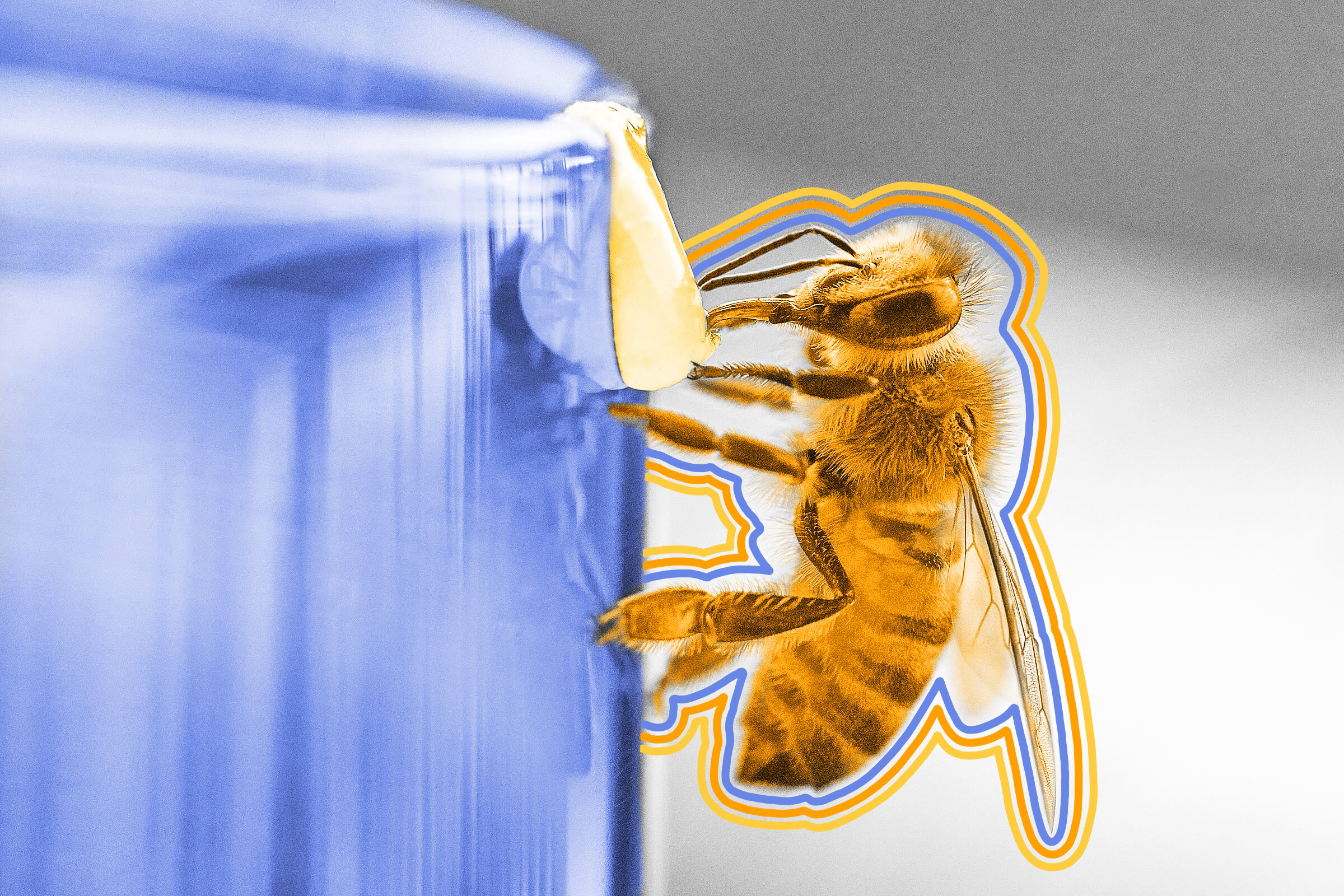
Can bees recognize your face?

Make every day more interesting. Each day a surprising fact opens a world of fascinating information for you to explore. Did you know that….?

December 29, 2025

Original photo by leandro fregoni/ Unsplash

Bees can recognize human faces.

Humans have known about bees for a long time: 8,000-year-old cave paintings in Bicorp, Spain, show early humans scaling trees to collect honey. But modern scientists wanted to know if bees recognize us, which is why researchers have put the insects' microscopic brains to the test. In a 2005 study, honey bees were trained to memorize pictures of human faces by scientists who rewarded them for correct matches with droplets of sugar water. While a bee's-eye view isn't as clear as our own gaze, the buzzing insects were able to correctly differentiate between faces up to 90% of the time — even two days after first seeing them, and when the sweet incentives were removed.

The emerging research into bee brains shows that not all living creatures need the complex brain systems humans have in order to recognize and recall environmental differences, but some researchers say that's not entirely shocking. The Apis mellifera (aka the European honey bee) can visit up to 5,000 flowers in one day, distinguishing between buds that give off beaucoup nectar and those that don't. So, it makes sense that bees have some form of working memory. And unlocking how bee brains work has practical applications for both us and them: Tech developers may be able to fine-tune artificial intelligence systems (in part by understanding how such tiny brains work so efficiently), and entomologists can better focus on supporting these crucial insects — which are responsible for an estimated 80% of food crop pollination.

The No. 1 Washing Machine Hack You'll Wish You Knew Sooner

Tired of musty-smelling laundry? This simple washing machine hack is going viral, and for good reason. It removes hidden mold, grime, and bacteria that regular detergents miss. Thousands are using it to get fresher clothes and a healthier home in minutes. No tools, no scrubbing, just a powerful clean. Discover the No. 1 washer trick people wish they found sooner!

Learn More

*This content is brought to you by our sponsor which helps keep our content free.

Bees are the only insects that make honey.

__ is the study and science of bees.

Numbers Don't Lie

Number of bee species native to the United States

4,000

Year Cleveland, Ohio, hosted the first U.S. national spelling bee

1908

Number of times a bee flaps its wings per second

230

Year hairstylist Margaret Vinci Heldt invented the beehive hairdo

1960

The Secret Audiologists Don't Want You To Know

Big companies charge THOUSANDS for hearing aids, but guess what — you don't have to pay that much! Oricle Hearing gives you crystal-clear sound, wireless charging, and all-day battery life for under $100. No doctor visits, no crazy prices — just amazing hearing at an unbeatable deal. More than 217,734 happy customers are already loving their new way of hearing. Don't let overpriced hearing aids hold you back. Order yours today!

Learn More

*This content is brought to you by our sponsor which helps keep our content free.

Arctic bees hibernate for nine months.

Most researchers agree that bees are weather-sensitive; species living in four-season environments generally appear with warming spring temperatures and disappear into their hives to wait out winter. But that doesn't mean all bees are delicate — some pollinator species are able to withstand the colder temps of the Arctic Circle. In the short summers between rugged winters, arctic bumblebees do the heavy lifting of pollinating wildflowers and berries that other animals rely on. Bombus polaris have adapted to the unforgiving climates of northern Alaska, Canada, Scandinavia, Russia, and elsewhere with thicker fur and the ability to shiver their muscles to raise internal temperatures, but they also have shorter lifespans than bees in warmer regions. Queen arctic bumblebees emerge from a nine-month solitary hibernation in May with one task in mind: quickly laying eggs to jump-start a colony that will live only a few months, save for one new queen — who will replace her in August to start the process all over again.

Today's edition of Interesting Facts was written by Nicole Garner Meeker and edited by Bess Lovejoy.

YOU MIGHT ALSO LIKE

7 Buzzing Facts About Bees

Read More

We love to collaborate. To learn more about our sponsorship opportunities, please connect with us here.
325 North LaSalle Street, Suite 200, Chicago, IL 60654

Tidak ada komentar:

Posting Komentar

Extended! EXTRA 40% OFF 🥂

Ends on 12/31 at 11:59 PM PT ͏  ͏  ͏  ͏  ͏  ͏  ͏  ͏  ͏  ͏  ͏  ͏  ͏  ͏  ͏  ͏  ͏  ͏  ͏  ͏  ͏  ͏  ͏  ͏  ͏  ͏  ͏  ͏  ͏  ͏  ͏  ͏  ͏  ͏  ͏...