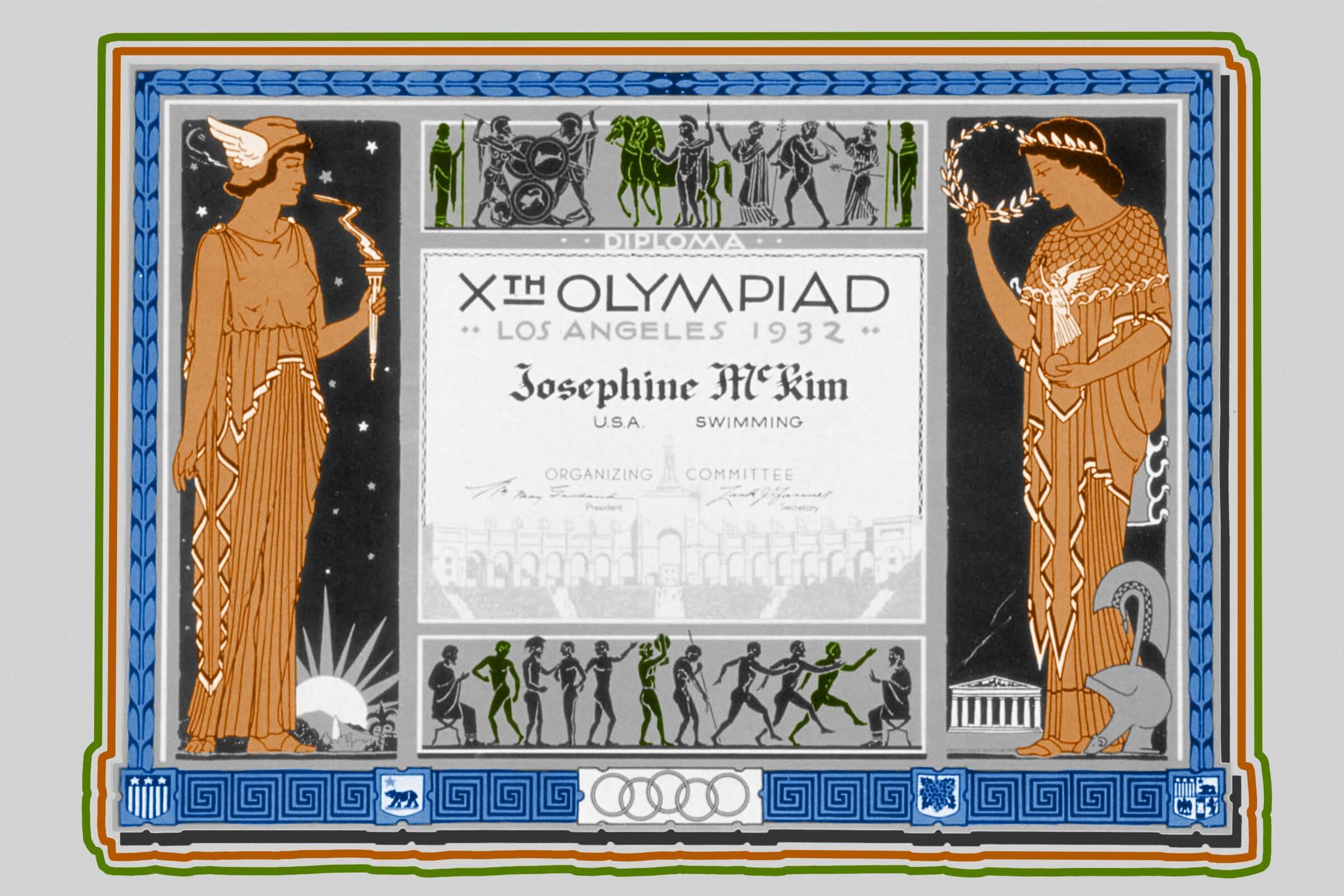
| While the top three athletes in any Olympic competition take home medals, those who finish in the top eight receive a prize more commonly associated with graduating school: a diploma. Organizers have awarded these diplomas since 1896, the year of the first modern Olympiad, though back then they were given only to the winner. The field was expanded to the top three in 1923, the top six in 1949, and the top eight in 1981. Much like Olympic medals, the paper certificates are designed by the host country. Early diplomas were quite ornate; the ones awarded at the 1896 Athens Games depicted Greek mythological figures next to the Acropolis. Modern designs, however, are typically more minimalistic, largely featuring text on a white or off-white background. Each diploma includes details such as the athlete's name, the event, and where they placed. The diplomas for the top three medalists have a gold, silver, or bronze background relative to their position. By comparison, diplomas given to athletes who finish fourth through eighth feature an uncolored background. The diplomas are sometimes sent by mail, while others are presented to the athlete in ceremonies held by their own national organizing committees after the competition. Still, some Olympians are surprised to find out Olympic diplomas even exist. | 






Tidak ada komentar:
Posting Komentar