08 Februari 2026

How deep is the deepest cave?

Make every day more interesting. Each day a surprising fact opens a world of fascinating information for you to explore. Did you know that….?

February 8, 2026

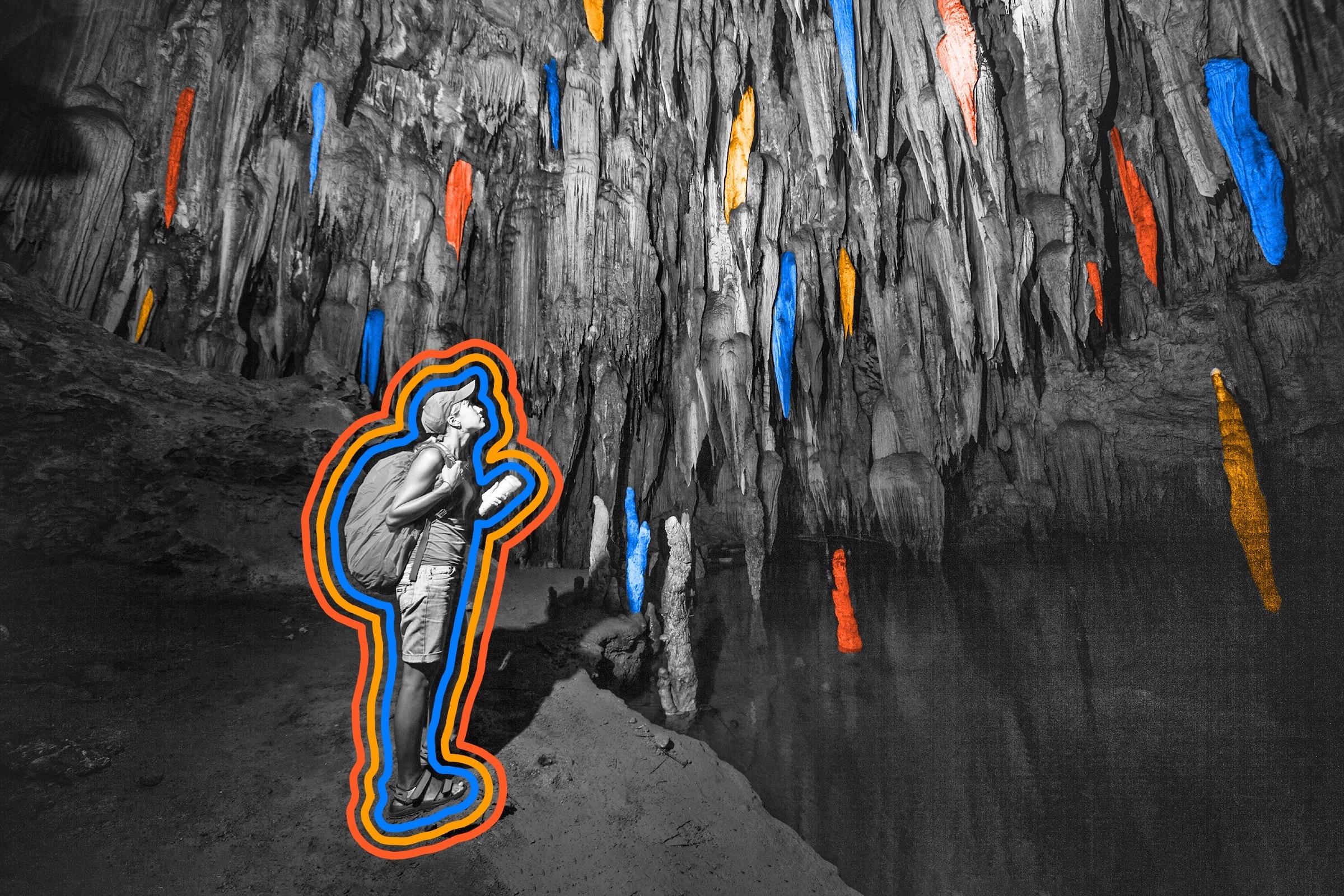
Original photo by mihtiander/ iStock

The four deepest caves in the world are all found in the same region.

Tucked away in the Western Caucasus mountains where Europe meets Asia is a hidden geological wonder. Thousands of feet below the limestone surface, enormous caves stretch downward like the hollow roots of some gigantic tree. Called the Arabika Massif, this area is home to the four deepest caves in the world, including the very deepest, Veryovkina. Would-be spelunkers may have to use their imaginations, though: The mountainous terrain is less than hospitable, and the caves themselves are located in fraught political territory. All are within the borders of Abkhazia, a breakaway state recognized by much of the world as part of Georgia but with increasing ties to Russia.

The location of Arabika Massif's limestone, its thickness, and its gentle slope toward the Black Sea create the perfect conditions for these huge caves, and the world record holder isn't set in stone — pun intended. It was only in 2018 that speleologists (cave scientists) discovered that Veryovkina was actually deeper, at 7,257 feet, than its rival Krubera's roughly 7,215 feet. Veryovkina may not hold onto its record forever, though, as speleologists plunge ever deeper into the world's caves in search of unknown species and the secrets of Earth's geological past. Yet based on the current rankings, it seems like a fair bet that the deepest-cave crown won't leave the mountains of Abkhazia any time soon.

Why Getting Up From Your Chair Becomes More Difficult as You Age

Some people in their 70s, 80s, even 90s are active and mobile. Others their same age struggle just to get out of a chair. Research from Harvard University found out why: it's "Joint Drought," an underlying condition that dries out your joints from within. When you address the "drought," your joints feel younger and you become more mobile than you've been in years.

Read More

*This content is brought to you by our sponsor, which helps keep our content free.

Early humans lived only in caves.

Animals that have adapted to live in caves are known as __.


Many animals that live in caves don't have eyes.

Vision is useless in most cave environments because sunlight can't penetrate into the depths of these natural rocky fortresses. Evolution has thus slowly eliminated vision from many animals living in caves, sometimes by completely removing their eyes. For example, a variety of the blind cave fish (Astyanax mexicanus), native to Mexico, evolved to lose its eyeballs after leaving open waters for the comfort of limestone caves. Instead, these fish "see" by sucking in water and sensing the magnitude of the pressure changes as the water flows around them and surrounding objects. Other animals, like some amphibians, spiders, and scorpions, have similarly lost their vision as they've adapted to the gloomy interiors of their lightless world.

Today's edition of Interesting Facts was written by Darren Orf and edited by Bess Lovejoy.

 
We love to collaborate. To learn more about our sponsorship opportunities, please connect with us here.
325 North LaSalle Street, Suite 200, Chicago, IL 60654
Advertisements powered by LiveIntent • AdChoices

Tidak ada komentar:

Posting Komentar

How deep is the deepest cave?

Make every day more interesting. Each day a surprising fact opens a world of fascinating information for you to explore. Did you know that...