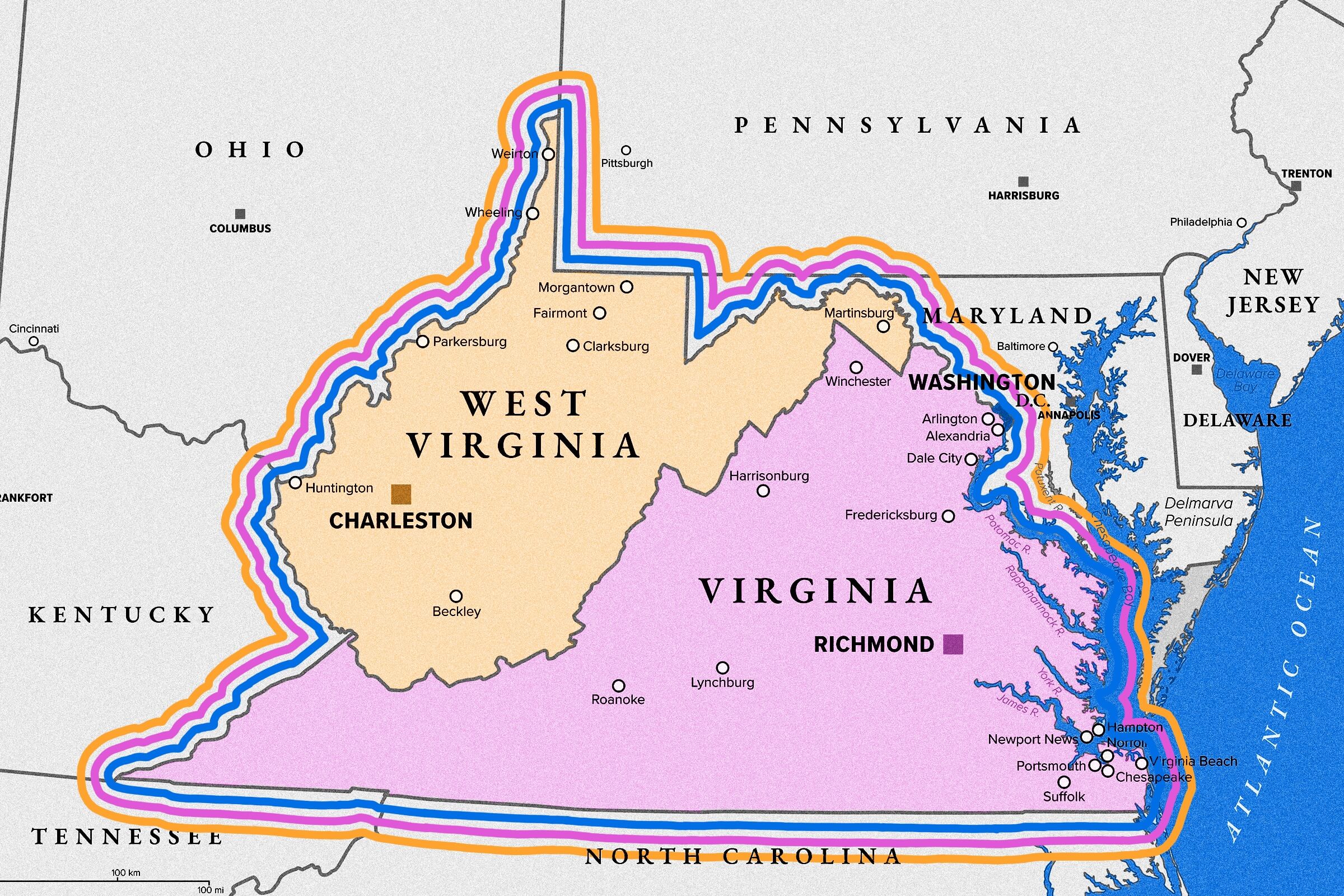
| "West Virginia" is a bit of a misnomer, as the bordering state of Virginia actually extends farther west than its neighbor. West Virginia's westernmost point is located just north of the town of Fort Gay along the Big Sandy River in Wayne County. You'd need to travel another 55 to 60 miles west before reaching the western edge of Virginia, which is located in Cumberland Gap National Historical Park along a three-way border shared by Kentucky and Tennessee. The origins of this oddity can be traced to the 1820s, when the land that is now modern-day West Virginia was still part of Virginia. At the time, many western Virginian communities (i.e., those west of the Great Appalachian Valley) felt underrepresented in the state legislature, which operated out of Richmond on the east side of the state. This disconnect came to a head when Virginia seceded from the Union in 1861 at the start of the Civil War — a choice many in the future state of West Virginia disagreed with — thus causing 39 western counties to secede from Old Dominion and form a new state. The original proposed name was "the State of Kanawha" after a prominent river in the region. But many locals still held the name "Virginia" in high regard, so lawmakers voted in favor of "West Virginia" instead — though the name more aptly reflects cultural differences than it does precise geography. On April 20, 1863, President Abraham Lincoln proclaimed West Virginia would become the 35th U.S. state, and it formally achieved statehood on June 20 of that same year. | 



Tidak ada komentar:
Posting Komentar