16 Januari 2026

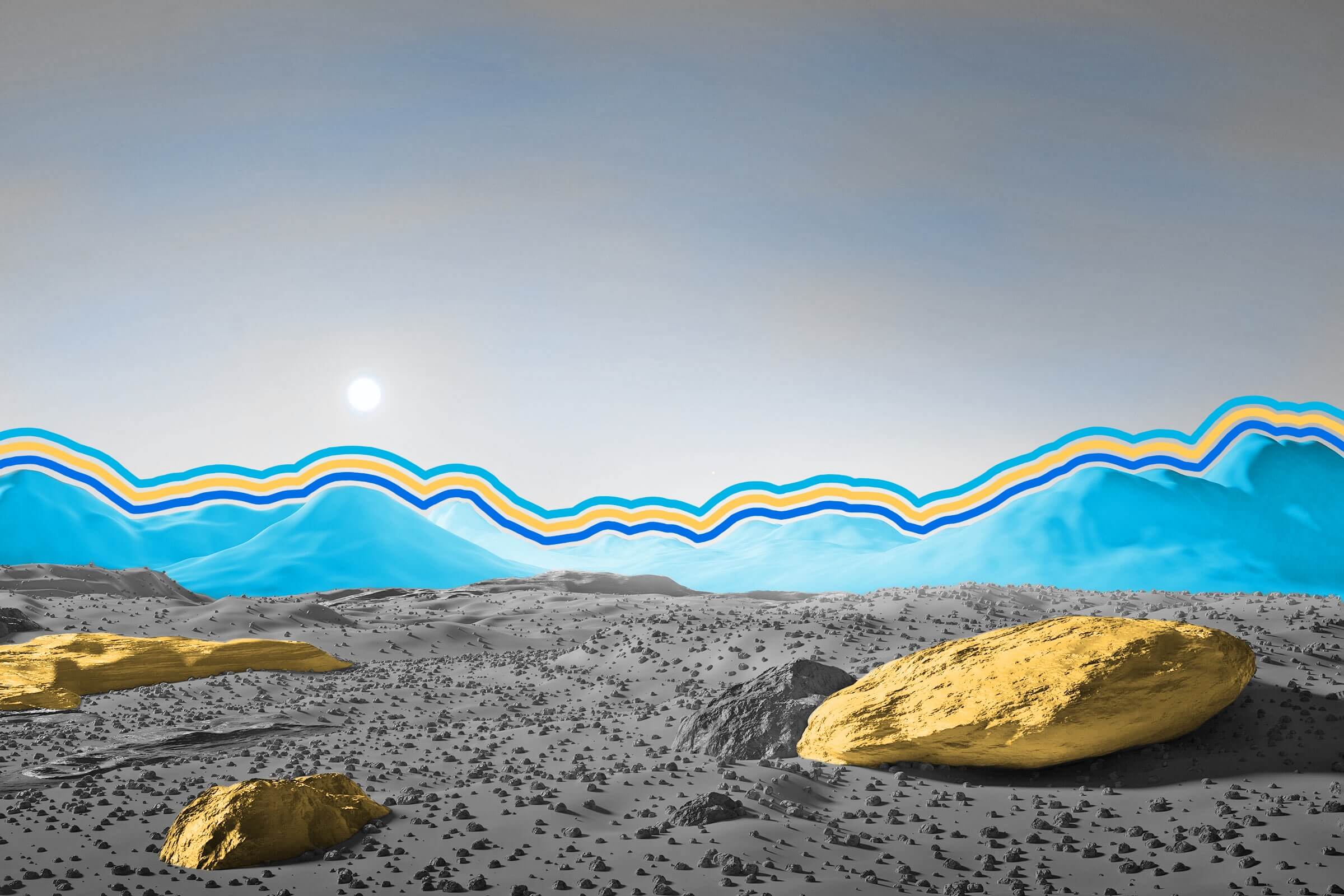
Where sunsets are blue

Make every day more interesting. Each day a surprising fact opens a world of fascinating information for you to explore. Did you know that….?

January 16, 2026

Original photo by solarseven/ iStock

Sunsets on Mars are blue.

No two planets are the same — even when it comes to their sunsets. As the sun dips below the horizon on Earth, the sky blossoms into warm hues of oranges, pinks, and reds. But that's not the case everywhere in the galaxy. Sunsets, of course, have to do with the properties of the visible light spectrum, in which light takes on a variety of colors. Our sky appears blue, for example, because when light reaches the Earth's atmosphere, gases (oxygen, carbon, and nitrogen) and molecules scatter the shortest wavelengths of light (violet and blue) the most. When the sun sets, it's lower in the sky, and light travels farther through a denser atmosphere. As more of the light is scattered, the short blue wavelengths disperse, and more of the longer red and yellow wavelengths actually reach our eyes. 

Although Mars is our planetary neighbor, its skies are almost completely the opposite. During the day, the skies above the red planet are, well, red, but at the end of a Martian day, a blue haze forms. Although the same physics are at work, the planets' different atmospheres produce contrasting results. Mars' atmosphere (or lack thereof) is mostly carbon dioxide and iron-rich dust. It's this dust, made of larger particles than in Earth's atmosphere, that scatters the light in different ways than on Earth, creating red skies during the day. When the sun sets, the Martian dust preserves more of the short blue wavelengths. In 2020, NASA applied this gaseous light physics to create a "sunset simulator" that shows off the end-of-day light displays on other planets, moons, and exoplanets — proving that the galaxy is indeed a kaleidoscope of color.

16 Nearly Secret Things to Do if You Have Amazon Prime

Do you shop on Amazon? If so, you might be missing out on huge savings and a chance to earn extra cash on every purchase you make. These 16 hacks could help you save money, earn cash, cancel unwanted subscriptions, and much more.

Learn More

*This content is brought to you by our sponsor which helps keep our content free.

Ash from volcanic eruptions dulls sunsets on Earth.

In the Northern Hemisphere, sunsets are more vivid during the __ season.


16 Things to Try if You Pay for Amazon Prime

Do you shop on Amazon? If so, you might be missing out on huge savings and a chance to earn extra cash on every purchase you make. These 16 hacks could help you save money, earn cash, cancel unwanted subscriptions, and much more.

Learn More

*This content is brought to you by our sponsor which helps keep our content free.

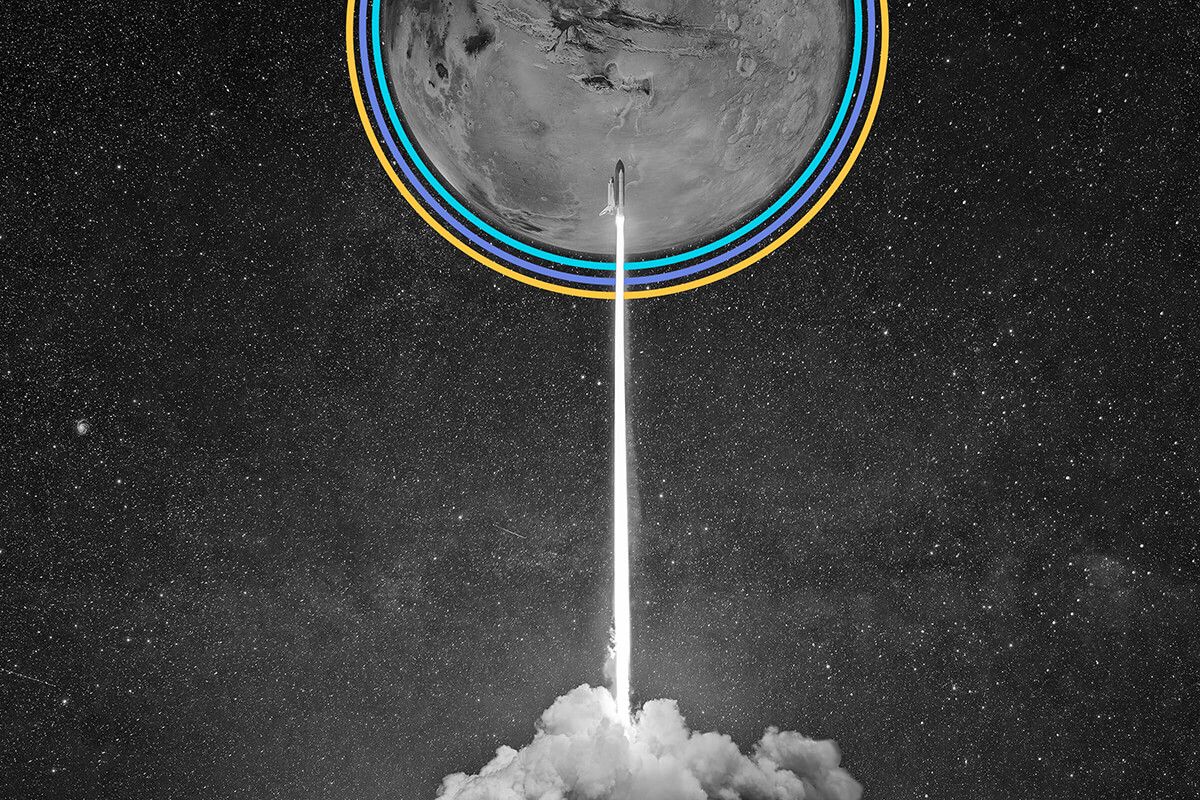
One day a ring may encircle Mars.

According to modeling produced by scientists at Purdue University in 2017, in 70 million years the Martian moon Phobos will reach the planet's Roche limit, the point where objects are torn apart by tidal forces. Once this happens, a ring of debris will surround Mars, somewhat similar to the ring around Saturn (though to a less extraordinary degree). This theory also suggests that this won't be the first time Mars has had rings. Over the past 4.3 billion years, Mars has likely gone through cycles of rings and moons. In the far future, Mars' rings will once again coalesce and become a new moon, some five times smaller than Phobos.

Today's edition of Interesting Facts was written by Darren Orf and edited by Bess Lovejoy.

 
We love to collaborate. To learn more about our sponsorship opportunities, please connect with us here.
325 North LaSalle Street, Suite 200, Chicago, IL 60654
Advertisements powered by LiveIntent • AdChoices

Tidak ada komentar:

Posting Komentar

💘 It’s On — 25% OFF Valentine’s Bags All Weekend!💘

LIMITED STOCK. Shop the sweetest styles before they're gone. ͏  ͏  ͏  ͏  ͏  ͏  ͏  ͏  ͏  ͏  ͏  ͏  ͏  ͏  ͏  ͏  ͏  ͏  ͏  ͏  ͏  ͏  ͏...