04 Januari 2026

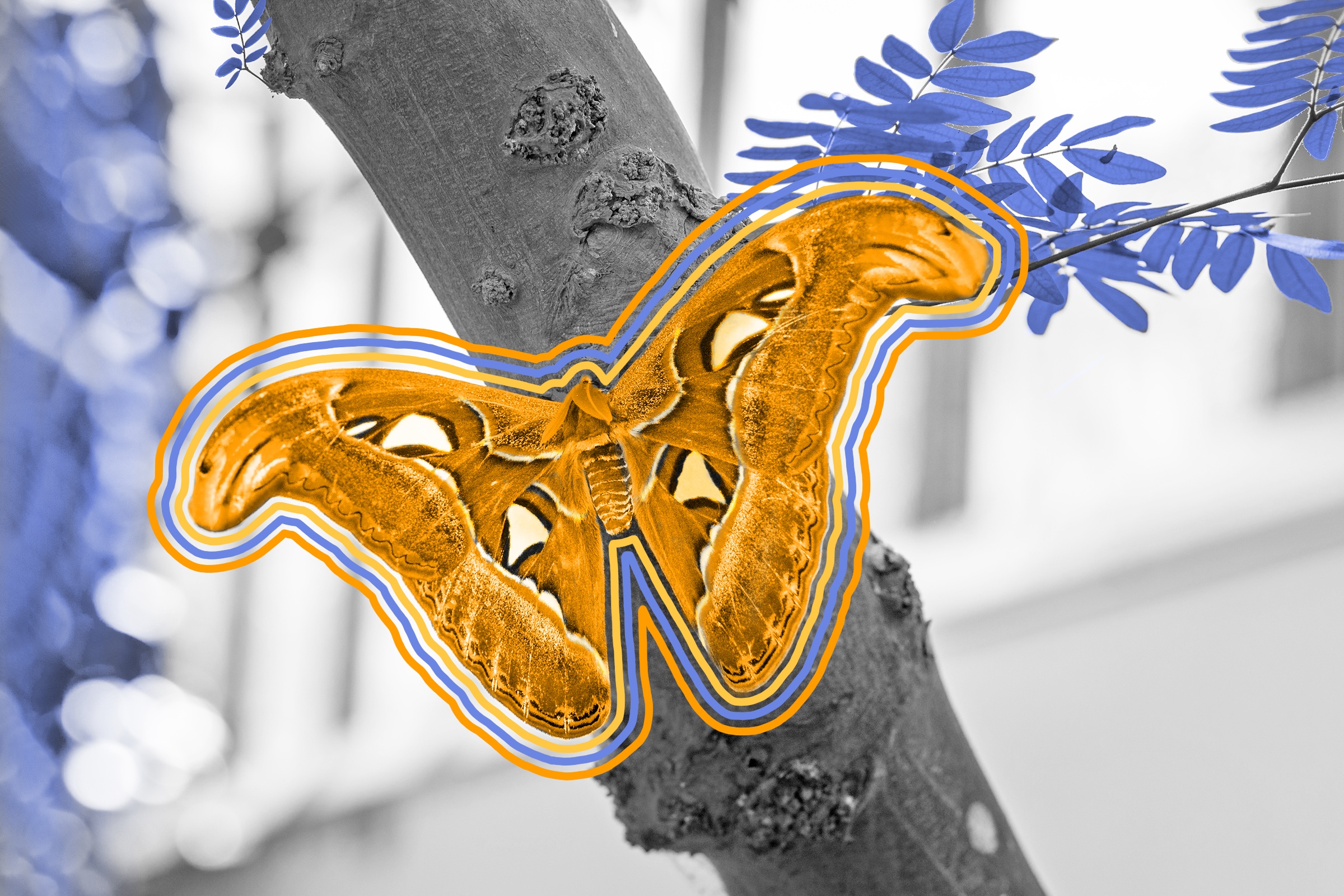
What's the world's largest moth?

Make every day more interesting. Each day a surprising fact opens a world of fascinating information for you to explore. Did you know that….?

January 4, 2026

Original photo by Petr Kahanek/ Shutterstock

Atlas moths, the largest in the world, have wingspans close to 12 inches.

In the subtropical forests of the Malay Archipelago, a moth of seemingly impossible proportions flutters among the trees. Named the atlas moth (Attacus atlas), this saturniid — meaning a member of the Saturniidae family — is the largest moth in the world in terms of overall size, with a staggering maximum wingspan of nearly 12 inches and a surface area up to 62 inches. The moth is so huge that it's often mistaken for a bird at first glance. Being a big moth means it's also a big caterpillar, stretching up to nearly 5 inches long, and its silk cocoon is so durable that people in Taiwan sometimes use them as purses. Sadly, the moths are also short-lived, surviving only one to two weeks after emerging from their cocoons.

Although the atlas moth is considered the biggest in overall size compared to other lepidopterans (a taxonomic order that includes butterflies, moths, and skippers), it isn't necessarily an outlier. The hercules moth (Coscinocera hercules), endemic to Papua New Guinea and Australia, comes in a close second with a wingspan of 11 inches, and the males have a graceful swallowtail that actually makes them the longest moth. Meanwhile, the white witch moth (Thysania agrippina), found mostly in Central and South America, has a maximum wingspan even slightly longer than that of the atlas moth, at 12.6 inches, although it's smaller overall. So while your average U.S. moth might be only a tiny nocturnal annoyance, remember that its big and beautiful brethren are fluttering elsewhere.

Together with

Keep More Cash In Your Pocket, Ditch The Insurance Stress

With so many other responsibilities on your plate, it's easy to let car insurance renew without question. But taking a few minutes to compare quotes could save you over $1,025 a year. Insurify lets you search more than 100 top insurers to find the right fit — with zero hidden fees and no pressure. It takes just minutes to start, and the savings can add up fast.

Search Now

*This content is brought to you by our sponsor which helps keep our content free.

Some moths don't have mouths.

The atlas moth may have been the inspiration behind the film monster __.


There's probably a reason atlas moth wings look like snakeheads.

The atlas moth isn't just the largest moth in the world — it's also visually stunning. Hidden in its multihued exterior are strange patterns on the upper tips of its wings (known as the apex of the forewing) that resemble two snake heads. This evolutionary trait warns off birds or other predators who are tricked by the impressive mimicry. Admiration for the atlas moth's pattern extends to humans, as the Cantonese name for the creature translates to "snake's head moth." Atlas moths aren't the only ​​lepidopterans that have a natural tendency to blend in, though. The Indian leafwing butterfly (Kallima paralekta) has evolved to look like a dead leaf (at least when it raises its wings), while other moths resemble hawk eyes, lichen, hornets, or tree bark.

Today's edition of Interesting Facts was written by Darren Orf and edited by Bess Lovejoy.

 
We love to collaborate. To learn more about our sponsorship opportunities, please connect with us here.
325 North LaSalle Street, Suite 200, Chicago, IL 60654
Advertisements powered by LiveIntent • AdChoices

Tidak ada komentar:

Posting Komentar

Last Chance to Win a Metallica Trip to Ireland✈️

Your donation helps Metallica support the creation of sustainable communities worldwide ͏  ͏  ͏  ͏  ͏  ͏  ͏  ͏  ͏  ͏  ͏  ͏  ͏  ͏  ͏ ...