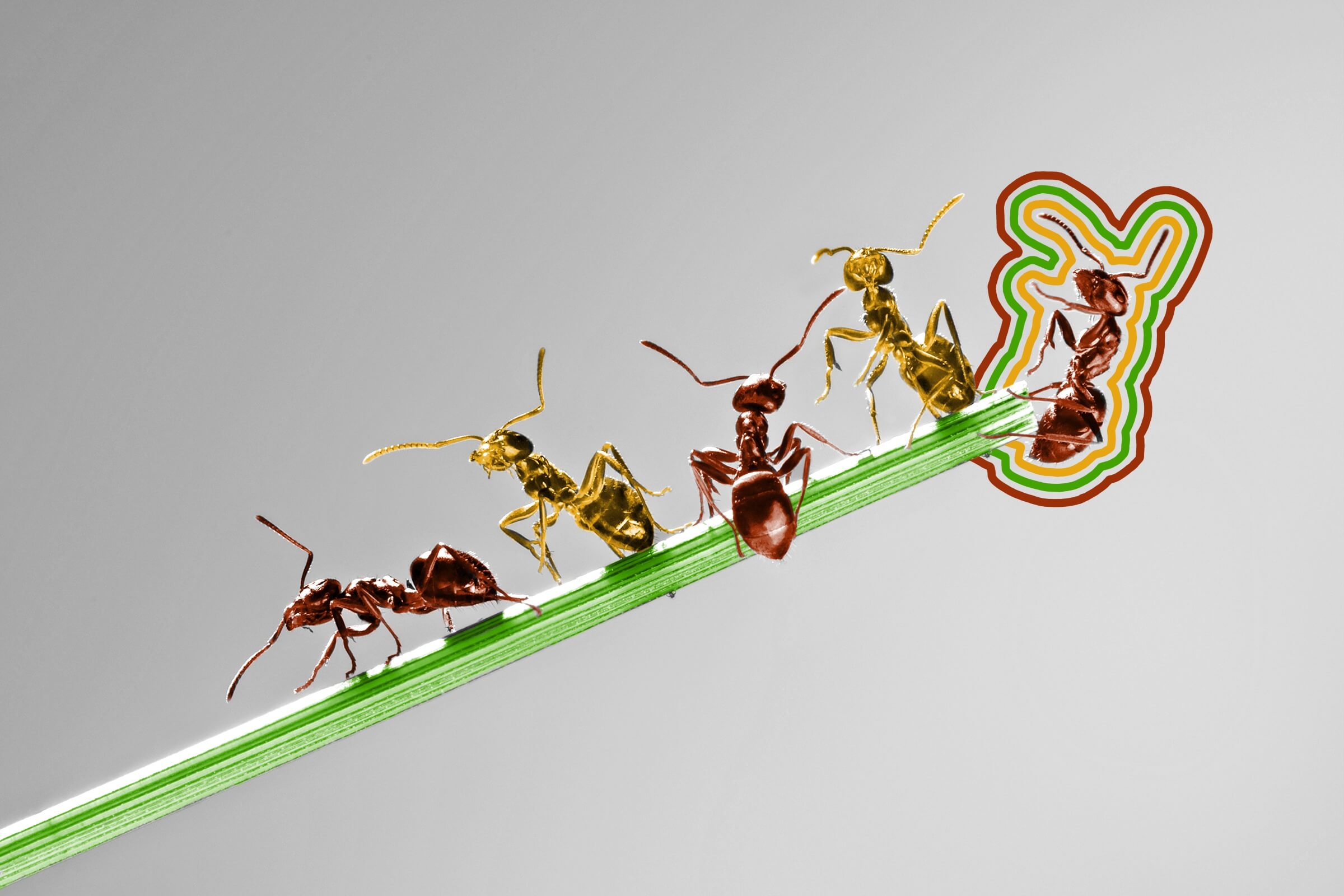
| In addition to invading picnics in the park, ants stage full-on conflicts with other ant colonies. Take the aptly named army ants — a term that applies to around 150 distinct species — which are among the many ant species, along with leafcutter ants and marauder ants, that fight each other for the purpose of territory or resource control. Research has shown those battles share striking similarities to human skirmishes, with ants relying on a combination of force, strategy, and chemical warfare to achieve victory. Army ants have been observed advancing in tight phalanx formations that overwhelm opposing colonies with their sheer size. Some colonies send smaller numbers of scouts beforehand in search of food; those scouts then return to assemble a fighting force. Some species, such as the Matabele ant, even have some ants who essentially act like wartime medics, carrying injured ants away from the fight and tending to their wounds. There's also evidence of ants strategically deploying "weaponry" in battles with other ant colonies. For example, the Raspberry crazy ant secretes a substance that neutralizes fire ant venom, while door ants explode when threatened and spew toxins on enemies. Other species, such as leafcutter ants, craft armor from magnesium calcite that helps them withstand oncoming attacks. Many ants also instinctively know when it's time to retreat and fight another day, displaying an unwillingness to fight to the death in a losing situation — unless it's for the purpose of defending their nest. | 





Tidak ada komentar:
Posting Komentar