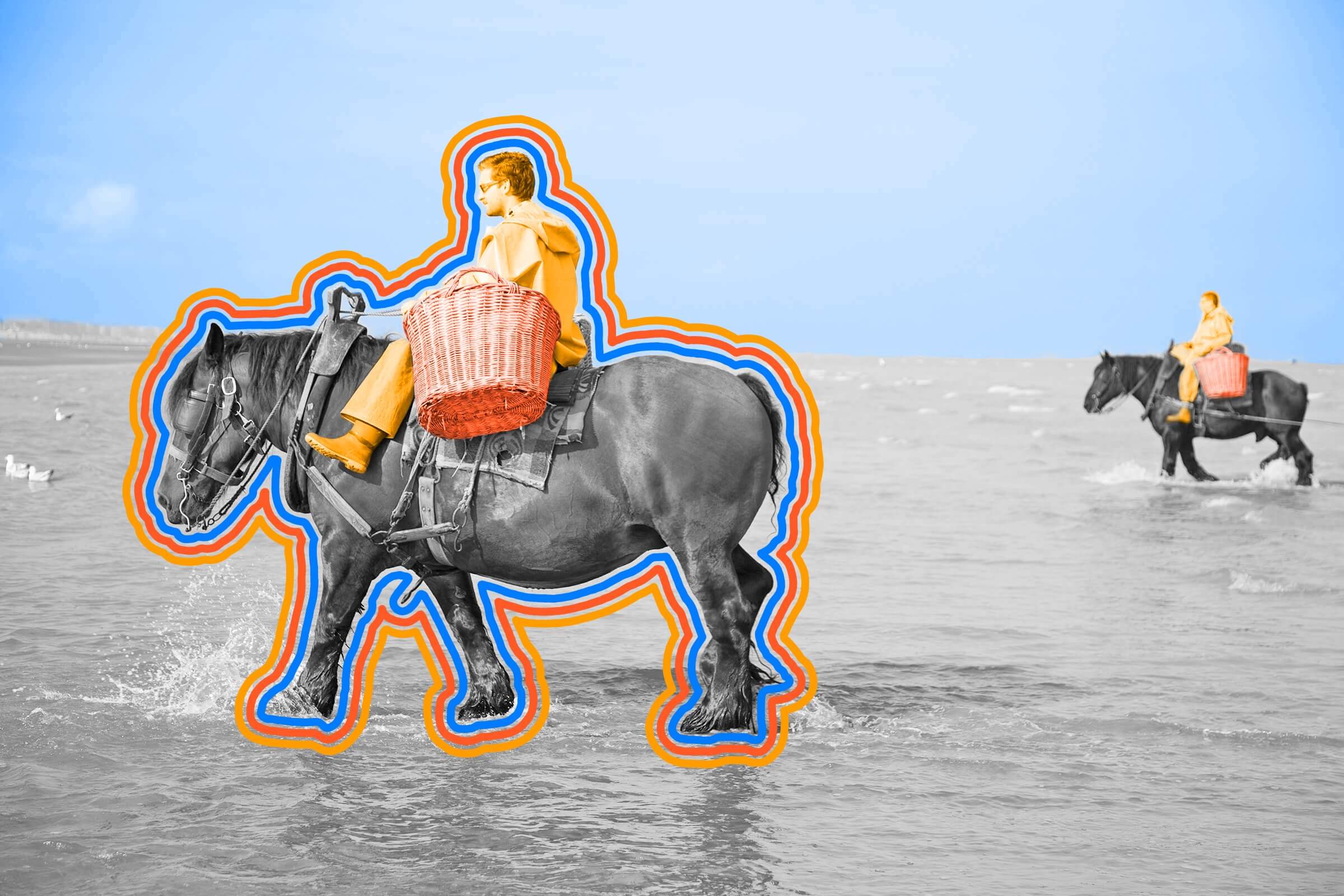
| On the western tip of Belgium's coast, the town of Oostduinkerke keeps alive a tradition more than twice as old as Belgium itself. Since the late 15th century, seaside communities that line the North Sea have practiced a form of shrimp fishing in which horse-riding fishermen, or paardenvisser, trawl the coast's shallow waters to capture tasty crustaceans. About 500 years after it began, the tradition was recognized by UNESCO as part of humanity's intangible cultural heritage. But what was once a common sight in the sea's shallow waters is now a rarity, as only a handful of known paardenvissers still exist. Although the method at its most basic is simply dragging a net behind a Brabant draft horse, the process actually employs some clever physics and mechanics. Attached to each net are two metal-and-wood boards that, thanks to water pressure, keep the net continuously open. A metal chain attached to the front of the net sends shockwaves through the sand, causing shrimp to jump into the trap. As the horse drags the net through the surf, water pressure pushes the catch to the back of the net, which makes room for yet more shrimp. Adorned in their typical bright-yellow oilskin jackets, paardenvissers are often seen along Oostduinkerke's coast during shrimp fishing seasons (from March to May and from September to November), as well as in June when the entire town gathers for the Shrimp Festival. This two-day event is filled with elaborate floats, costumes, and a parade celebrating the towns crustaceous cultural heritage. | 





Tidak ada komentar:
Posting Komentar