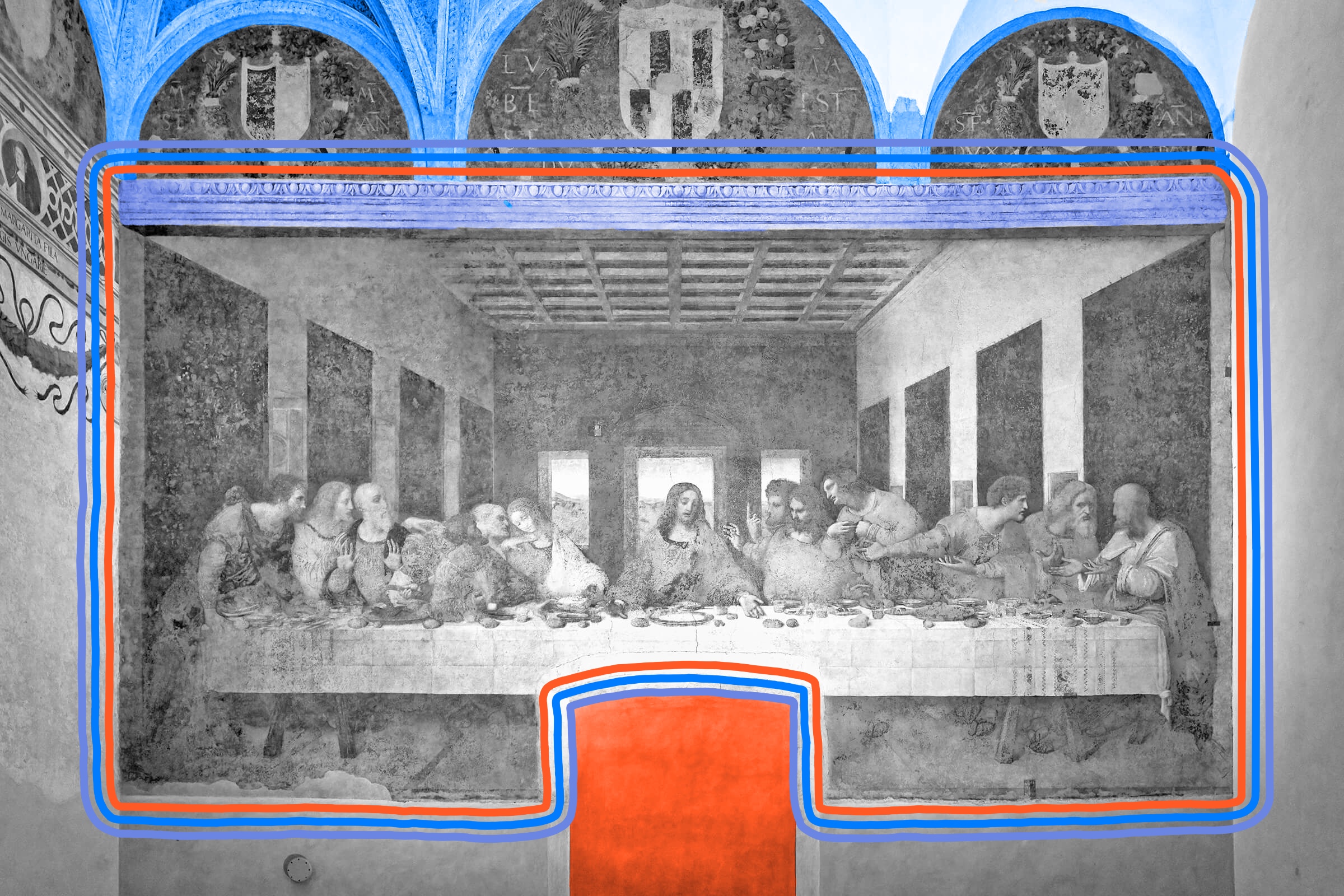
| Like a lot of masterpieces from centuries past, "The Last Supper" has undergone significant changes since it first saw the light of day. Perhaps most significantly, Leonardo da Vinci's most famous work not named "Mona Lisa" originally included Jesus' feet. That particular detail was lost in 1652, when the installation of a doorway on the refectory where the mural was painted led to removing the portion that included Jesus' sandals. Efforts to digitally restore "The Last Supper" to its original form after centuries of decay have recently made it possible to see not only Jesus' feet in detail but also the spilled salt shaker on the table (which has been widely interpreted as foretelling doom) as well as Judas' coin purse. If you'd like to see the work today, you won't be traveling to a regular museum. "The Last Supper" remains in Milan's Santa Maria delle Grazie, on whose walls it was originally painted (probably between 1495 and 1498), and the convent wasn't exactly built with large crowds in mind. Small groups are allowed in every 15 minutes, and visitors are advised to make reservations as early as possible — a limited number of people are allowed to see "The Last Supper" each day. | 




Tidak ada komentar:
Posting Komentar