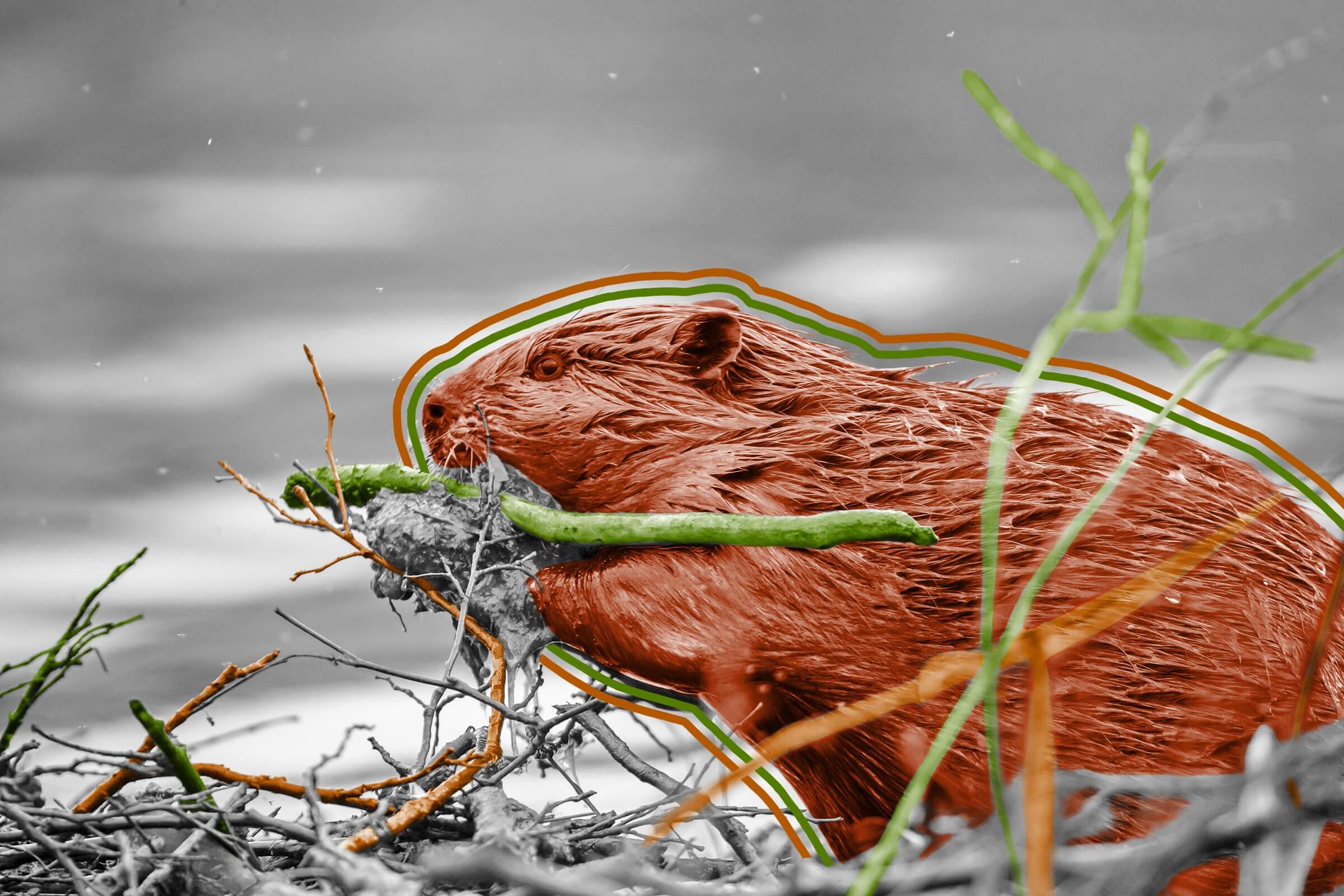
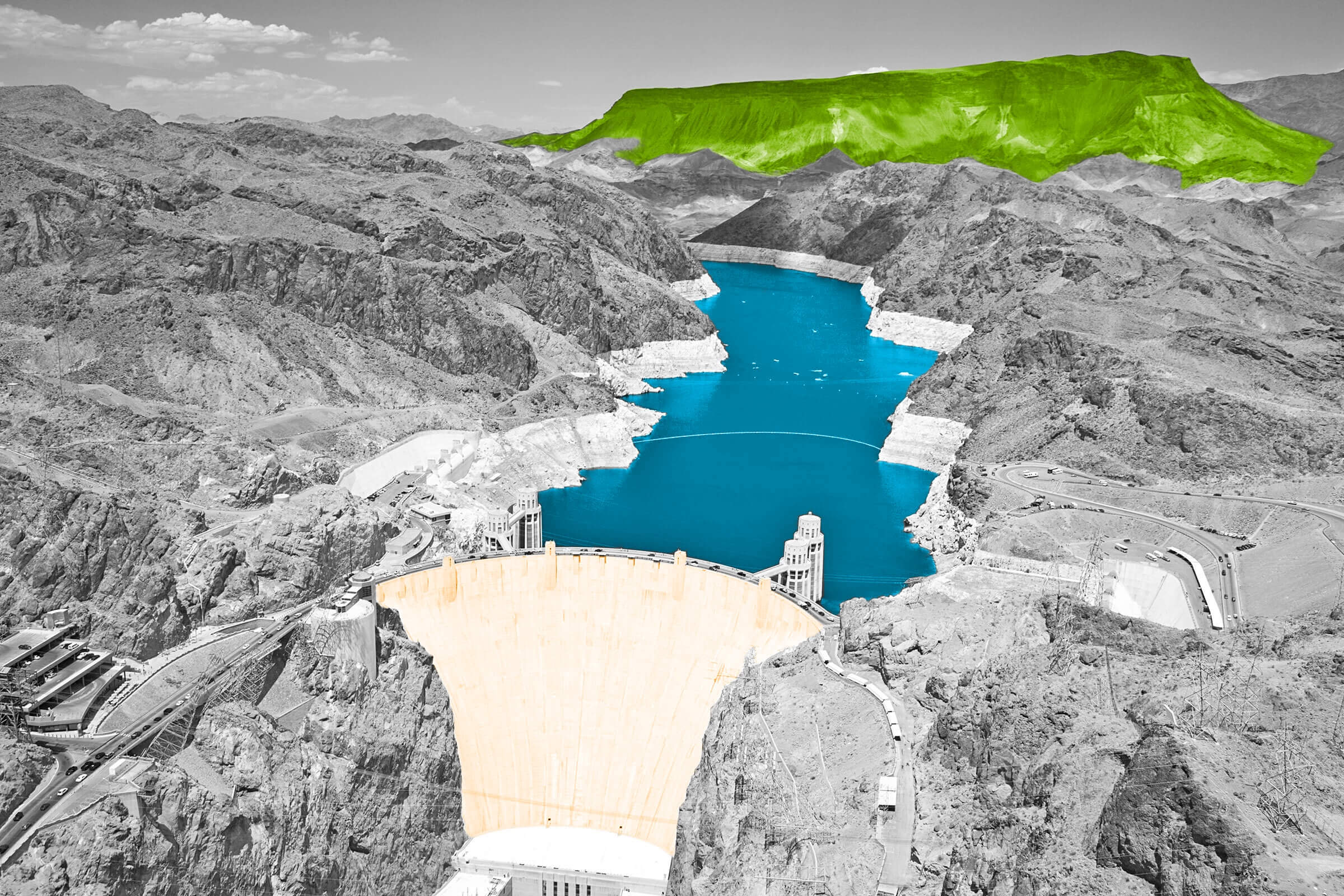
| While there are a few human-made objects visible from space, there's only one known example constructed by beavers: the world's largest beaver dam, located in the Peace-Athabasca Delta of Canada's Wood Buffalo National Park. You can't see it from space with the naked eye, but the dam was discovered on October 2, 2007, using satellite imagery provided by Google Earth. It appears to have been built during the last five decades, as photographs taken of the same location in 1975 show limited beaver activity. Estimates put the length of the dam at more than 2,600 feet, and based on satellite imagery, it's been measured to cover an approximate surface area of roughly 750,000 square feet. The pond created by the dam is estimated to hold nearly 2.5 million cubic feet of water. To use an analogy Canadians would surely approve of, that's roughly the same amount of water needed to fill 1,600 standard ice hockey rinks. Given its remote location miles from any paved road or trail, accessing the dam requires a multiday trek through wetlands and forest. That inaccessibility poses such a challenge that only one known individual has ever visited the dam itself. In July 2014, adventurer Rob Mark completed the perilous trek, snapping a celebratory selfie with the beaver lodge behind him. Upon his arrival, he noted how difficult it is to grasp the dam's enormity from up close, and how its sheer size is better appreciated with the photographs taken from space. | 




Tidak ada komentar:
Posting Komentar